Roofers in Kington Langley
A hilltop village built around three greens, with a Grade II* house of about 1690 that once made woollen clothing and a Victorian church, and roof costs shown before we ever visit.
Kington Langley at a glance
- Distance
- 22.8 road miles south-south-east of Stroud
- Council
- Wiltshire Council
- Conservation area
- Kington Langley village
- Setting
- Hilltop village with three greens
Kington Langley's three greens and the hill above them
Kington Langley stands on a hill that rises to 100 metres at the western end of the parish, on sandy soil over Oxford Clay. Wikipedia describes it as a squared village with three greens, the largest of them the Common, and that layout shapes the roofs as much as the hill does: houses face onto open grass, so front slopes are on view from the grass.
The village is old in its records and younger in some of its buildings. Langhelei, with 25 households, appears in the Domesday Book of 1086, and Kington Langley was part of the parish of Kington St Michael until 1865. The Greathouse, built about 1690 and used as a woollen clothing factory from 1783 to 1832, is Grade II* listed. St Peter's Church, designed by C. H. Gabriel in Early English Gothic style and completed in 1857, is Grade II listed.
The village has a designated conservation area, which Wiltshire Council holds under the reference CA/N/120. Houses here vary in age and build, from The Manor, a Grade II house that began as an inn called The White Horse, to much later homes, so we read each roof when we get there. The survey photographs it and identifies the material first, and only then does a repair or replacement get discussed. Wiltshire Council's planning team can confirm whether your address falls inside the conservation area.
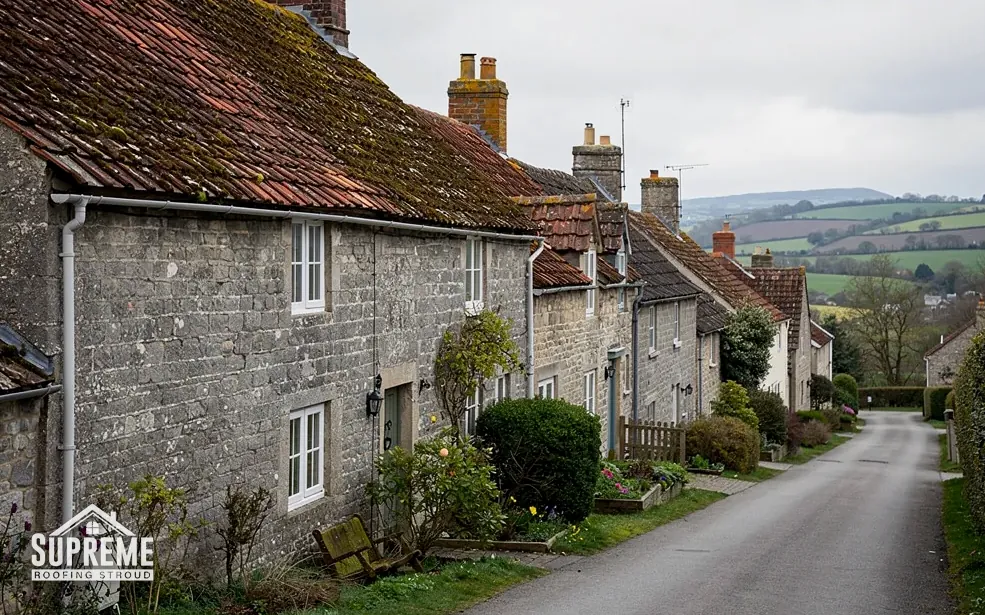
Row of stone cottages with mossy clay tile roofs along a quiet lane 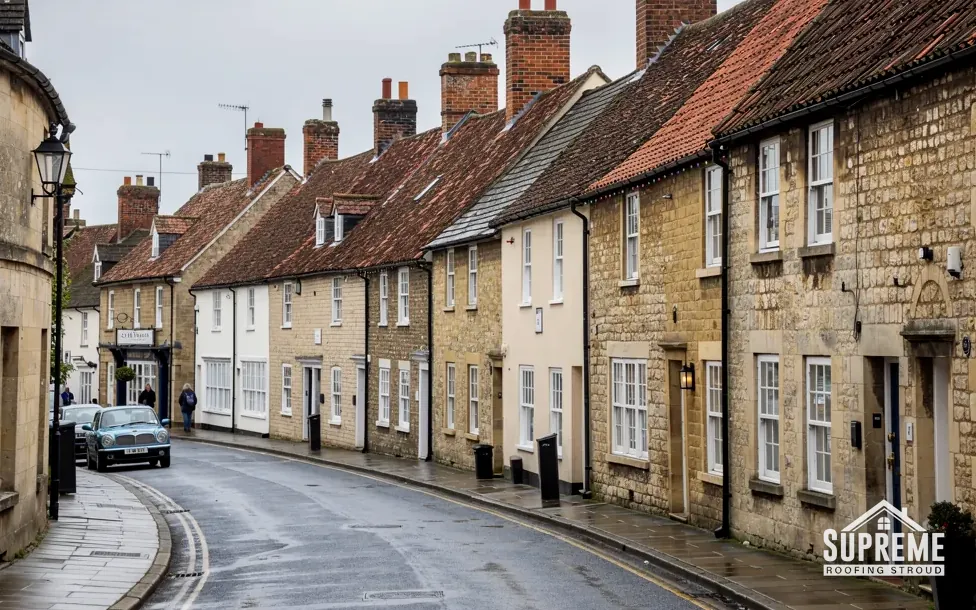
Curving street of stone and rendered terraced houses with tiled roofs
Chapter 01
Working round the three greens and the Common
A squared village puts every front roof in public view and every lorry on open grass.
Chapter 01In this chapter
Houses set round a green are seen from the green. A tired ridge, a patch of mismatched tiles or a leaning stack is visible to every neighbour, and a good repair stays invisible. For a house on one of Kington Langley's three greens, the survey starts with a look from the grass, the way a passer-by sees the roof, and then moves up a ladder and onto a camera. The photographs stay with the quote, so you can compare the finished job against how the roof stood before.
In this chapter
The greens bring their own practical questions. A scaffold or skip may have to stand on a verge or grass rather than on the plot, and who owns and manages that land is not always obvious. That is raised during the survey, and we agree the arrangement with whoever owns the grass before a start date is fixed. Heavy vehicles can cut up a green, so we put the delivery route on the written quote and say how the ground will be protected.
The Common is the largest of the three, and on a wide expanse of grass the houses around it can look very alike from a distance. Up close, each has its own roof history. A house that has had its ridge re-bedded, a neighbour whose tiles were replaced a few years back, and a third with original coverings still on the north slope can stand side by side. We look at all of that rather than treating the green as one uniform street.
Hill and slope
The parish rises to 100 metres at its western end, and a house on a rise has its own working conditions. Materials have to be carried or lifted uphill, and gutters shed water downhill into whatever is below. Before we finish on a sloping plot, we follow each downpipe to see where it empties, because a new gutter that empties against a wall solves one problem and starts another. A pitched roofing job on a hillside plot is priced with scaffold and access allowed for.
Gutters and downpipes on a house facing a green also deserve a look from the front. A run of gutter that has sagged, or a bracket that has pulled from a fascia, shows from the grass long before it shows indoors. Straightening a sag early is a small job, whereas a fascia board left to rot is a larger one.
The conservation area
A house in the conservation area is held to a higher standard of care, so changes to the look of a roof are best discussed with Wiltshire Council's planning team before work is ordered. For a straightforward repair in matching material, the position is usually simple, and we aim to leave the covering as it was laid, in the same colour, texture and pattern of courses.
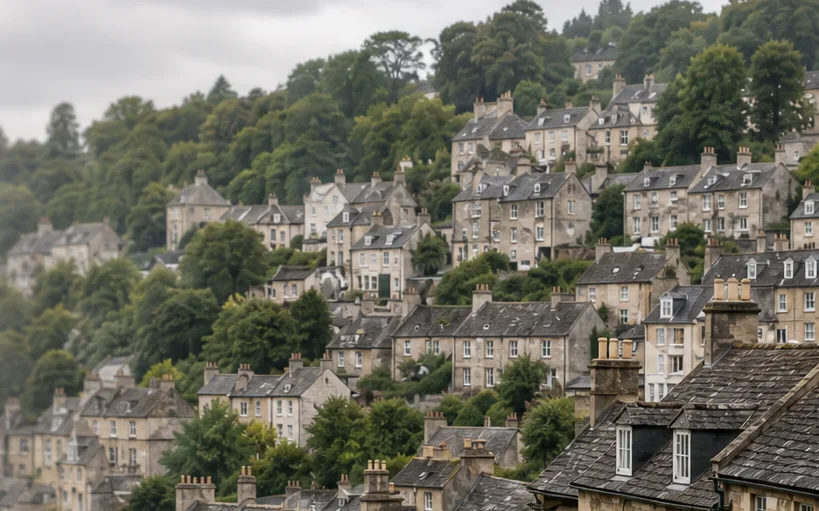
A good repair on a green is the one nobody notices.
Chapter 02
The Greathouse and its history as a clothing factory
A house of 1690 that worked as a factory for half a century is a reminder that old roofs lead several lives.
Chapter 02In this chapter
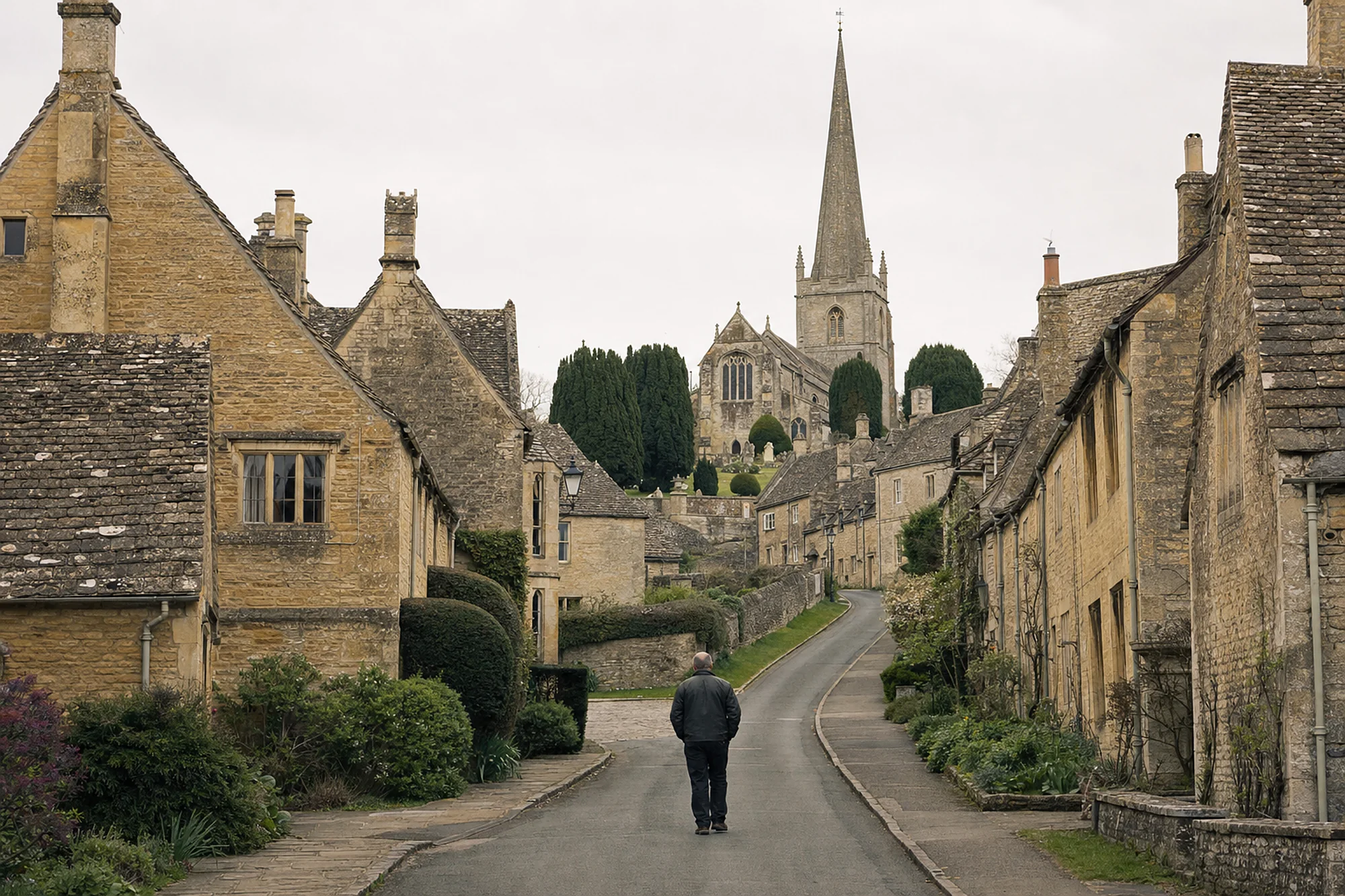
The Greathouse was built about 1690 and was used as a woollen clothing factory from 1783 to 1832. It is Grade II* listed, which puts it among the more significant listed buildings, and the principle with a building of that rank is to retain every part of the original that can be retained. A house that was a home, then a workplace, then a home once more will have been altered, patched and covered again more than once, and the roof is where those layers are easiest to read.
In this chapter
Wiltshire Council's listed building consent is needed for works that would change what makes a listed building special. The smoothest route is repair in kind, using the same material, method and detail. Before touching anything we record the roof in photographs, which gives a conservation officer a clear view of what exists and what is proposed. Outbuildings within the grounds may be caught by the listing as well, so ask the council about them early.
Lead at the junctions
Old roofs depend on lead where one surface meets another: at a chimney, along a wall, in a valley. Lead sheet is sold in codes by thickness, and the table here lists the lighter ones, following Leadworx. MyJobQuote says lead flashing correctly fitted can last more than 80 years, and more than 100 on higher codes, so lead on an old roof is often worth repairing in place. A full replacement of chimney flashing averages about £570, according to the same source, while a patch costs £150 to £250. Our lead roofing page goes through the choices.
Lead is also easy to get wrong. Sheets that are too long expand and split, which is why MyJobQuote notes that the right code is fitted in lengths of 1.5 metres. Joints, laps and the way a flashing is chased into the masonry decide whether lead lasts the century or splits within a few winters, and we describe the detail on the quote in plain words.
Stacks and chimneys
The chimneys of a house of 1690 are likely to be older than its current roof covering. A stack that has stood for centuries will have had its pointing renewed, its pots swapped and its flashing replaced more than once, so we climb to it and list the defects face by face. The chimney repairs page explains the repair options.
A listed roof is recorded before anyone touches it.
| Code | Thickness | Typical use |
|---|---|---|
| Code 3 | 1.32 mm | Soakers and light duty |
| Code 4 | 1.80 mm | General flashing work |
| Code 5 | 2.24 mm | General, vertical and pitched work |
| Code 6 | 2.65 mm | Large roofs |
Chapter 03
St Peter's, 1857, and a village that became its own parish
A Victorian church and Victorian houses now sit at an age when first coverings are failing.
Chapter 03In this chapter
St Peter's Church was completed in 1857 to a design by C. H. Gabriel in Early English Gothic style, and it is Grade II listed. Eight years after it opened, in 1865, Kington Langley stopped being part of the parish of Kington St Michael. The church stands at the centre of that history, and any roof laid at that date is now over 160 years old.
For roof work on St Peter's, the route is a diocesan faculty, which replaces the consent a listed house would need from the council. From us the parish can have a survey and a price covering the main slopes, the gutters and downpipes, and the flashings where roofs meet walls. Where a valley gutter runs between two slopes, a single blocked outlet can pour a great deal of water down the wall beneath.
Early English Gothic is a style of pointed arches and plain, steep lines, and a roof in that tradition is worth keeping in its original form. If the covering has to change, a match in material and profile preserves the building's character, and that is also the safer course with the diocese.
What a Victorian roof needs at 150 years
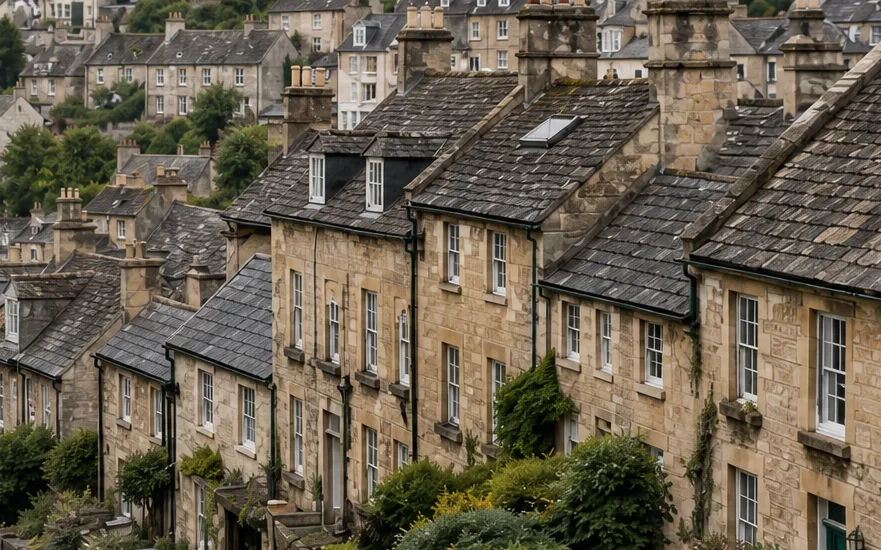
Houses and cottages of the Victorian period are reaching an age at which the original fixings are the limiting factor. Iron nails rust through, battens soften, and the covering itself may still be sound, so the choice is often between lifting and re-laying the existing material and replacing it. According to MyBuilder's 2026 guide natural slate gives 80 to 100 years or more, Welsh slate often passes a century, and a slate re-roof typically costs £100 to £180 per m². The fixings, not the slate, are what we examine first.
Where the fixings have gone but the slates are good, the slates can often be lifted, sorted, and fixed again with new nails or hooks on new battens. A fresh layer of underlay goes beneath, and any broken slate is replaced with a match. That keeps the visible roof as it is while renewing everything that holds it on.
Choosing between repair and re-roof
Repair is the better answer where a fault is confined to one area and the remainder is sound, and a re-roof is better where the decline is widespread. The photographs show which you have, and the quote sets out both routes with a price on each, so the choice is yours. Whichever you pick, our workmanship is guaranteed for 10 years in writing, with the waste removed when we finish.
Map showing Kington Langley and the Stroud service radius, with nearby towns we also cover.
Near Kington Langley
Roof work we do here
The Greathouse, three greens and St Peter's
Scaffold for my house on one of the greens would have to stand on grass. How is that handled?
We find out who owns and manages the land, agree the arrangement before a date is set, and protect the ground. The route for deliveries and the scaffold position are put on the quote, so the grass is never left to chance.
I live near The Greathouse, which is Grade II*. Does its listing apply to my roof?
Not automatically. A listing protects the building named, and it can extend to structures within its grounds. If your house is separate and has its own plot, the question is its own status, which Wiltshire Council can confirm.
Who authorises roof work on St Peter's Church?
While St Peter's is used for worship, the diocese grants a faculty for its roof work. We can survey the roof, photograph the defects and quote for the work, so the parish has figures to attach to its application.
The lead flashing on my hilltop cottage has split. Should I patch it or renew it?
It depends on how far the lead has gone. A split in an otherwise sound flashing can be patched, and MyJobQuote gives £150 to £250 for a patch on a chimney flashing. Where the lead has failed along its length, renewal is the better figure.