
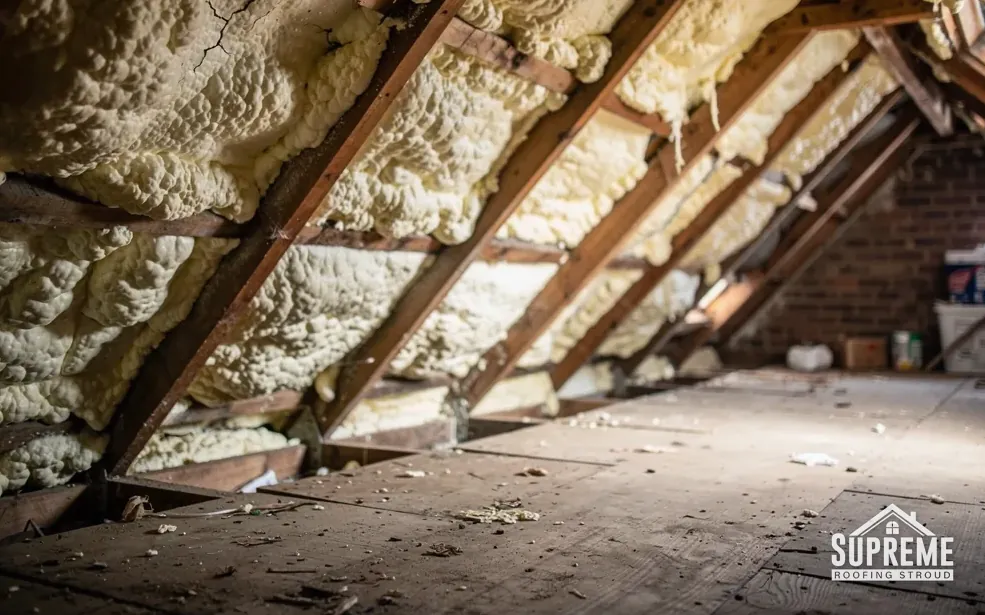
Spray foam insulation assessment and removal in Stroud
Foam on the underside of a roof is a risk to be measured, not a verdict. We inspect it, check the timbers we can reach, and price removal only where the evidence supports it.
Typical spray foam assessment and removal costs
Use these national figures to size up the job before anyone comes out. The area of foam, its type and what it is stuck to move the price more than anything else.
| Work | Typical price |
|---|---|
| Spray foam assessment | £100 to £200 |
| Foam removal | £20 to £50 per m² |
| Disposal of the removed foam | £150 to £400 |
| Repairs and new insulation afterwards | £500 to £3,000 |
| Timber repairs found under the foam | priced on survey |
| Tiles or slates lifted for access | priced on survey |
After the loft visit, the written quote covers every one of those jobs, and anything that only shows once the foam is off is marked provisional.
Source: MyBuilder spray foam insulation removal cost guide, updated August 2026 (national figures, excluding anything specific to your roof).
Assess first, remove where the evidence says so
Some foam roofs are dry and sound. Others are hiding trouble. The work is in telling them apart, then dealing with what we find.
-
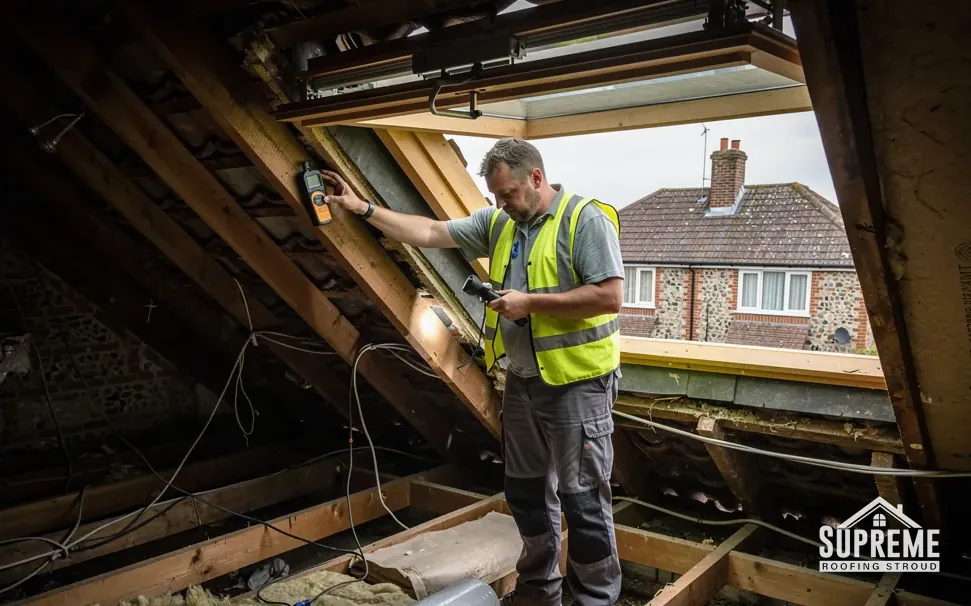
Assessment of the foam and the roof void
We identify the type of foam, measure its thickness, see what it is stuck to, and take moisture readings on the timbers wherever they can be reached.
-
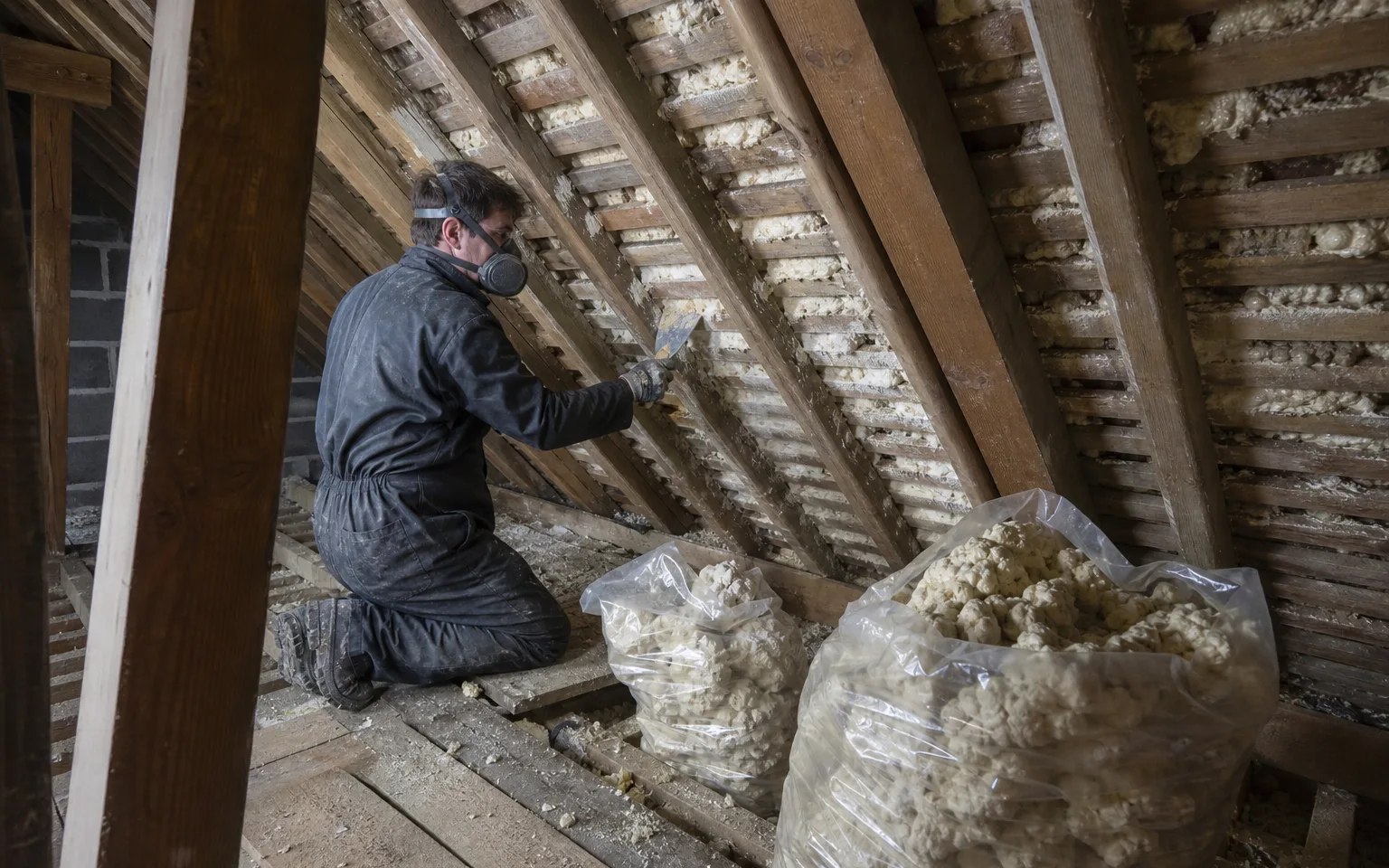
Removal from rafters, boards and tiles
Foam comes off the timbers by hand and by machine, the covering is lifted where foam has pushed through, and the debris is bagged and taken away.
-
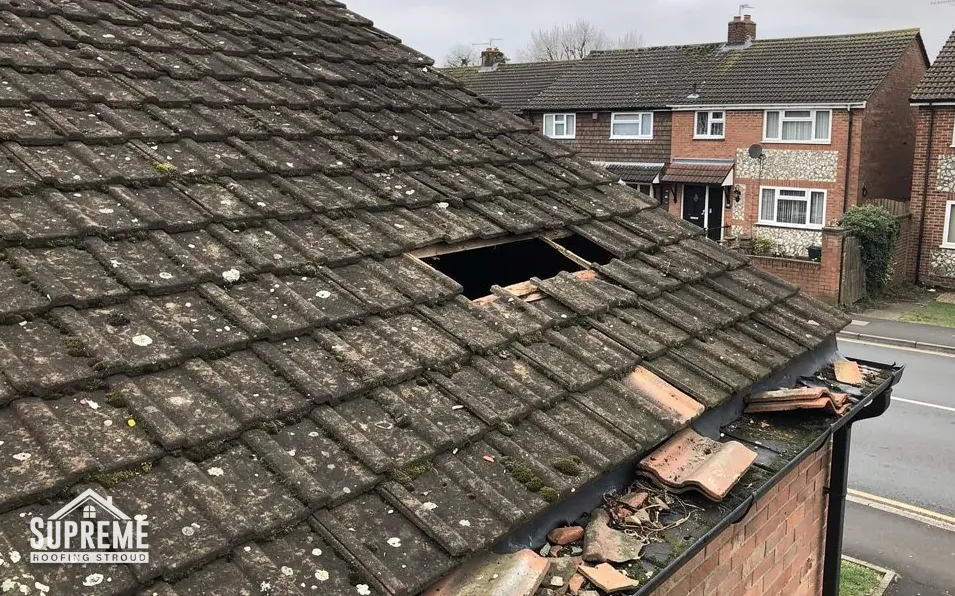
Repair and re-insulation that can breathe
Decayed timber is cut out and replaced, and the roof is closed again with an underlay and insulation build-up that lets moisture escape.
Signs your spray foam roof needs a closer look
- A surveyor or lender has named the foam in a report or a refusal
- Every rafter and roof board is hidden under one continuous layer of foam
- A musty smell or damp patches on the ceilings with no obvious leak outside
- Foam was sprayed over old tiles, slates or felt with no thought for ventilation
- The paperwork you inherited has no calculations, product data or guarantee
How an assessment and removal job runs
- 1Survey and photographsFrom the loft we photograph the foam, note its thickness and type, and push a moisture meter into every timber we can reach.
- 2Written quoteRemoval by area, disposal, any timber repair and the new insulation each get a line, and provisional sums are labelled as provisional.
- 3Careful removalThe roof stays covered against the weather while the foam comes off and the timbers are exposed, with debris bagged as the work moves along.
- 4Re-insulate and sign offA breathable build-up goes back over cleaned timbers, with photographs of what was found, any Building Regulations notification handled, and our 10-year workmanship guarantee in writing.
The spray foam guide
Spray foam roofs, explained plainly
What the RICS says, why lenders and surveyors react, how timbers are checked, how foam comes off, and what goes back afterwards.
- 01What the RICS March 2023 position actually says
- 02Why some lenders and surveyors object to foam
- 03Inspecting the rafters and boards under the foam
- 04How spray foam is taken off a roof
- 05After the foam: re-roofing and re-insulating so the roof can breathe
- 06Period and listed homes, and the choice to remove or not
Chapter 01
What the RICS March 2023 position actually says
It describes risks and checks. It does not order every foam roof to be stripped.
Chapter 01In this chapter
The RICS published its consumer guide to spray foam insulation in March 2023, and Mortgage Solutions reported it on 3 March that year. Surveyors still work from it when they find foam in a roof, so it helps to read what it says rather than what gets repeated about it. You can read the RICS consumer guide yourself; it is short.
In this chapter
The guide does not ban spray foam and it does not say every installation has to come out. It describes how foam goes wrong and which checks should come first. Incorrect installation, it warns, can lead to dampness, including uncontrolled condensation, and damage to parts of the property. Before foam goes on, a qualified professional should carry out thermal calculations and condensation risk checks. For anyone who bought a house with foam already under the roof, that last point turns into a question worth asking: did anyone do those checks, and does any paperwork survive?
The two phone calls it recommends
The guide also tells owners to check with their mortgage provider whether the lender's policy allows the installation, and to check with their insurer in the same way. These are practical steps, not technical ones. They explain how a decision taken in one year can come back as a problem in another, when the house is valued, remortgaged or sold.
Why a survey flag is not a verdict
When a surveyor writes "spray foam" in a report, they are recording a risk, not a defect. The foam may be sound, the roof void dry and the timbers in good order. Or the foam may be sitting on top of an old leak or a patch of decay that nobody can see. Only a look tells the two apart: the type of foam, how thick it is, what it is stuck to, and what the moisture meter says in the timbers that can be reached.
Open-cell or closed-cell
The type matters because the two behave differently. Open-cell foam is soft and lets some moisture vapour through. Closed-cell foam is dense, rigid and grips hard to what it touches, which makes it a bigger obstacle to inspection and a harder job to remove. Our guide to open-cell and closed-cell foam sets out the differences for a roof.
Our assessment is written so that it can be passed on to a surveyor, lender or buyer: photographs, readings and a plain statement of what could and could not be checked. That is a better document than an argument about whether foam is good or bad.
A survey flag records a risk; only an inspection shows whether the roof is sound.
Myth: The RICS says spray foam has to be stripped out of every roof.
Fact: Its guide describes the risks and the checks that should come first; it stops short of saying every installation must come out.
For a closer reading of the guide itself, see spray foam and the RICS guidance. If a surveyor has already flagged your foam, what a spray foam assessment report covers shows what you would get back.
Chapter 02
Why some lenders and surveyors object to foam
A dated snapshot of lender attitudes, and the reasoning behind a cautious valuer.
Chapter 02In this chapter
As of November 2024, a BBC investigation reported by Today's Conveyancer found that some lenders would not lend on a property with spray foam insulation, while others said they would look at applications case by case. That is a snapshot, and lenders revise policy without announcement, so treat the date as part of the fact. Ask your own lender, or your buyer's lender, what applies today.
In this chapter
What a lender is weighing
A mortgage is secured on the building, so a lender wants two assurances: that the roof structure is sound now, and that someone could find out if it stopped being sound. Foam stuck across the underside of a roof makes the second question hard. The rafters, battens and boards cannot be seen, probed or measured without disturbing the foam. A valuer who cannot rule out hidden decay may say so, and a lender that cannot price the risk may decline. The foam itself is rarely the complaint; the complaint is that nobody can see the wood it covers, and that taking the foam off later would be disruptive and costly for whoever owns the house at the time.
What a surveyor is weighing
A surveyor reports what can be seen and flags what cannot. A roof void sprayed from wall plate to ridge is a large area of timber out of sight. The RICS guide names uncontrolled condensation as the failure to watch for, so a careful surveyor will often recommend a specialist inspection before anyone commits to a purchase. That recommendation is where an assessment like ours fits. It replaces a vague flag with readings and photographs.

Equity release and insurers
The same reporting listed an equity release lender among those that would not lend, so owners who may release equity one day have a reason to check early. Separately, the RICS guide asks owners to confirm with their insurer that the policy allows the insulation. Answers differ from household to household, so we write "some lenders" and leave it there.
What helps a sale
Paperwork helps: an installer's survey, the calculations, product data and any guarantee. Where none exists, an independent timber assessment with moisture readings and photographs gives a buyer something to rely on. If the readings are poor, removal followed by timber repair and fresh insulation hands the next owner a roof that can be inspected again.
Our guides on spray foam and mortgages and selling a Stroud home with spray foam take each situation further.
| Who | What they want to know | What an assessment gives them |
|---|---|---|
| Mortgage lender | Can the roof structure be checked and is it sound? | Moisture readings and photographs of the timbers |
| Surveyor | What is hidden under the foam? | Foam type, thickness and the areas that could not be reached |
| Insurer | Does the policy allow the insulation? | A record of the roof's condition on a given date |
| Buyer | Will this need work soon? | A plain list of findings and a priced route if work is needed |
Lender policy is not ours to speak for. What we can do is put evidence in front of whoever is asking, and say clearly where the evidence stops.
Chapter 03
Inspecting the rafters and boards under the foam
The point of the exercise: find out what condition the wood is in, as far as it can be reached.
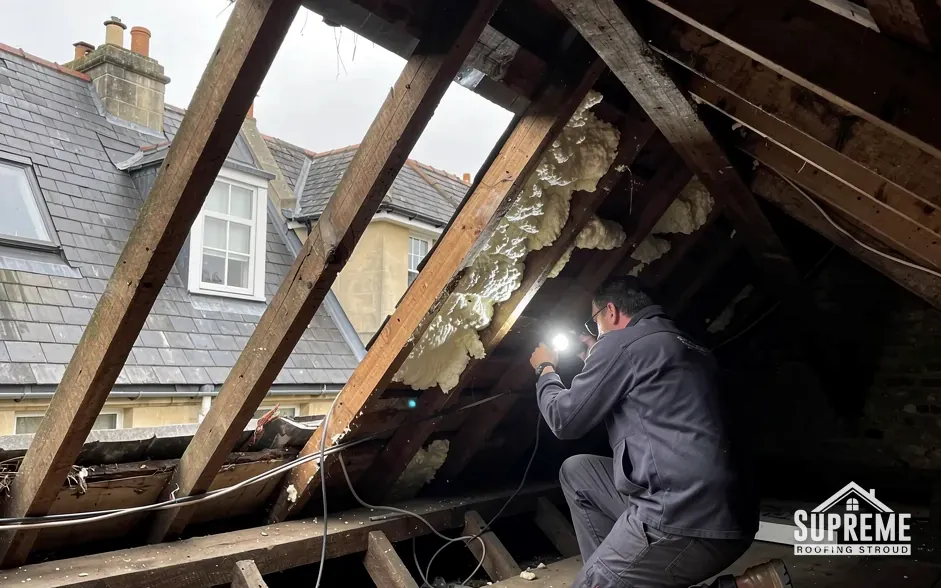
Foam sprayed to the underside of a roof wraps the rafters, covers the roof boards or the back of the tiles, and often runs down onto the wall plate. If the roof was sound when it was sprayed and has stayed dry, the timber underneath is simply covered. If water has been getting in, from a slipped tile, a failed flashing or condensation, the foam can hold it against the wood where air cannot dry it out.
In this chapter
What we can see from the loft
We start with the visible evidence. Staining that creeps beyond the foam edge, a sour smell, foam that has softened or pulled away, rusted nail tips poking through, and timber ends at the eaves that look dark or crumbly. We note where the foam meets chimneys, valleys, roof windows and the party wall, because those are the places where water tends to enter a roof.
Moisture readings
A moisture meter with pin probes gives a reading where the pins can reach the wood. In a foam roof that means the exposed ends of rafters, the wall plate, gable ends, hatch surrounds and any places the foam is thin or broken. Each reading is a snapshot of that spot on that day, so we record the date, the spot and the photograph together. Weather in the days beforehand can change a reading, which is why we repeat the worst ones.
Small inspection openings
Where a reading or a stain gives cause for concern, a small section of foam can be cut back to expose the timber behind it. We keep these openings small and tell you where they are so they can be checked again later. Cutting back a section also shows whether the foam is stuck hard to the wood or sitting loosely, which feeds straight into the removal plan.
What cannot be checked
Some timbers cannot be reached at all without taking the foam off, and a purlin or a ridge board buried in a thick layer is the usual example. The report names them rather than guessing at their condition. A roof with dry readings at every reachable point, and no staining anywhere, is a different case from a roof where half the timber could not be probed, and the report keeps the two apart.
If we find decay
Decayed timber is cut out and replaced, or sistered with new timber where a rafter still has a sound core. Once the wood is exposed we agree that repair with you, with photographs of what was found, so the extra cost is never a surprise on the invoice.
Our guides on inspecting roof timbers under spray foam and condensation and timber decay risk explain the methods and the causes in more detail.
Chapter 04
How spray foam is taken off a roof
Method depends on the foam, the covering and what the foam has crept into.
Chapter 04In this chapter
There is no single way to take foam off, because no two installations are alike. The foam might be thin or thick, soft or rigid, sprayed to boards or rafters or straight onto the back of the tiles. What it is stuck to decides the method, and the assessment is where that gets decided.
Soft foam
Open-cell foam is spongy and tends to come away from timber in lumps. It can be cut, pulled and scraped, with the loose material vacuumed up as the work moves along. The thin film left on the wood is brushed back. It is slow work, because the aim is to leave the timber clean enough to inspect and to take new insulation, without gouging it.
Rigid foam
Closed-cell foam grips firmly and is harder to shift. It is generally shaved, scraped or chipped off in pieces, working along each rafter, and what remains is cleaned from the timber surface. The job produces more dust and more waste, and it takes longer per square metre. Where the foam has been applied straight onto the back of the covering, it may not be possible to remove it without lifting the tiles or slates.
Working from outside
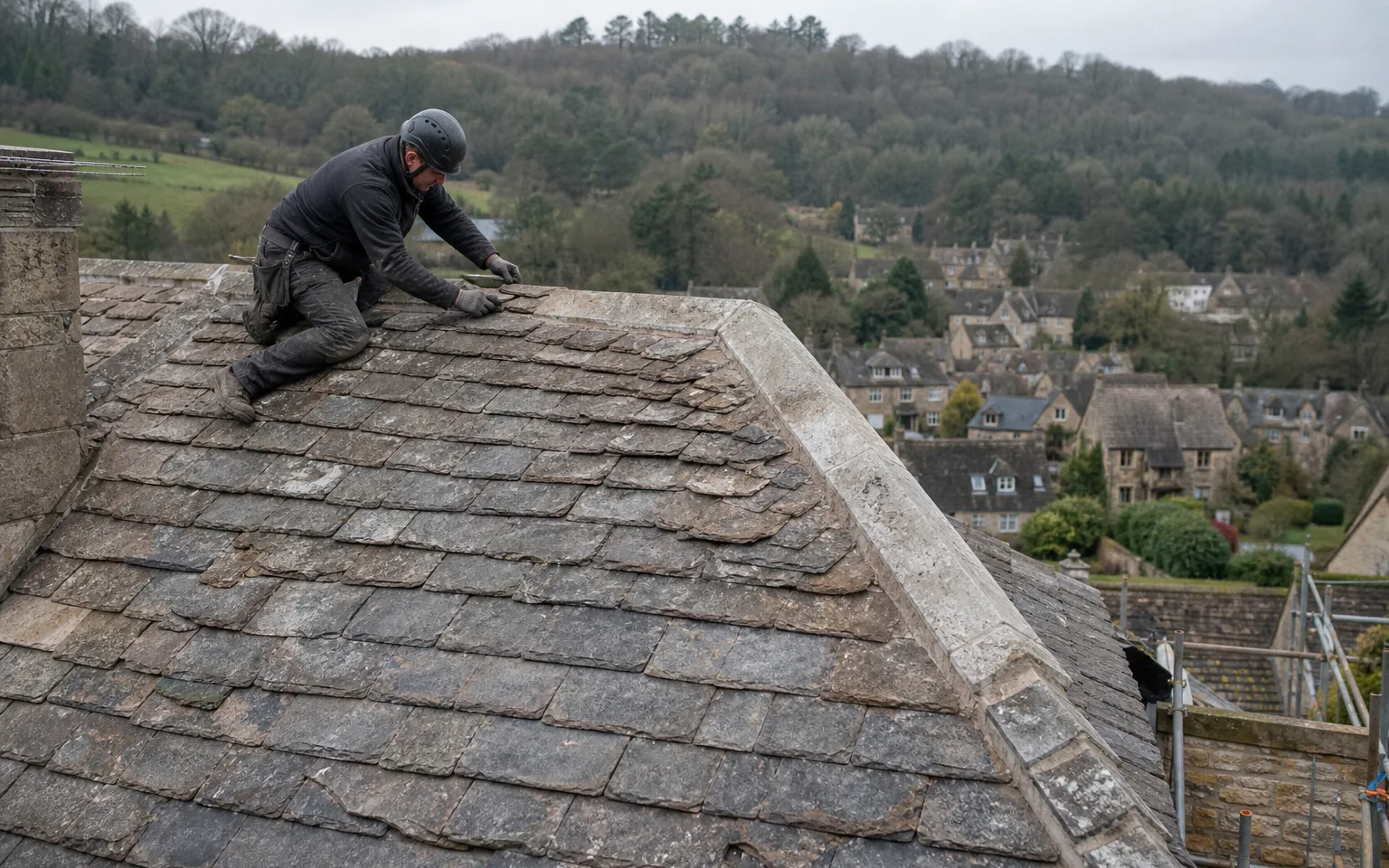
If foam has pushed through the gaps between tiles, or is stuck to the back of slates, the covering has to come off the affected area. We strip those sections, renew the battens and underlay as needed, then lay the tiles or slates back. A natural slate or clay tile that is stuck to foam can break on the way off, so the quote allows for some replacements. Tile and slate matching follows the like-for-like rule.
Protecting the house
Before a single piece comes off, dust sheets go down below the working area, the loft hatch and the stairs are covered, and a vacuum with fine filtration runs with the work. Waste is bagged inside the loft and carried out in sealed bags, and nothing is left behind in the garden or the drive. Our guide on how spray foam is removed from a Stroud roof covers the sequence step by step.
What it costs
MyBuilder's cost guide puts removal at £20 to £50 per m², with an average job at about £1,500. It also gives £100 to £200 for an assessment, £150 to £400 for disposal, and £500 to £3,000 for repairs and new insulation afterwards, all national figures from the guide updated in August 2026. The spread comes mainly from the area, the type of foam and whether the covering has to be lifted.
The foam decides the method, and the assessment decides what we price.
Per job
- Assessment£100 to £200
- Disposal£150 to £400
- Repairs and new insulation£500 to £3,000
Per m²
- Foam removal£20 to £50 per m²
Prices are driven by area and access, so what drives the price of spray foam removal goes through each factor, and our written quote reflects them.
Chapter 05
After the foam: re‑roofing and re-insulating so the roof can breathe
The point of removal is a roof that can dry out and be inspected, so the build-up that replaces the foam matters.
Chapter 05In this chapter
With the foam gone and the timbers cleaned, there is a decision to make about what goes back. The goal is a roof that keeps heat in without trapping moisture, and there is more than one way to get there. Which one suits depends on whether the roof is a cold roof with insulation on the ceiling, or a room in the roof where insulation has to follow the rafters.
Cold roofs and ventilation
BS 5250 is the code of practice on managing moisture in buildings, and Marley's published guidance on it sets out ventilation for a cold roof. Where the underlay is non-breathable, the guidance asks for a 25 mm gap running the length of the eaves on pitches of 15° or less, and 10 mm on steeper roofs. With a breather underlay and a well-sealed ceiling, fortuitous ventilation at the eaves can be all that is needed. Check the figures against your own product's data sheet and building control.
Rooms in the roof
Where the loft is lived in, insulation sits between and below the rafters, and the build-up has to deal with moisture from the room as well as from outside. Breathable underlays and vapour-open materials let the structure dry. Rigid boards, mineral wool and wood fibre are the usual choices, and the right one depends on the depth available between the rafters and on how much headroom the room can lose. We set this out in the quote so you can compare options.
When the covering comes off too
If the foam was stuck to the covering and the whole slope has to be stripped, the work moves into re-roofing. The Planning Portal says Building Regulations approval is not normally needed when less than 25 per cent of the building envelope and less than 50 per cent of the roof is affected. Past those limits an application is needed, and the roof can be asked for a thermal upgrade as well. Under Approved Document L, a new or replacement roof must reach a U-value of 0.15 W/(m²·K), and where the job is notifiable we deal with the Building Regulations side.
VAT
Installing roof or loft insulation in a home is zero-rated until 31 March 2027, according to HMRC's VAT notice, while general roofing work is standard-rated. Your quote shows the VAT.
Our guide to re-insulating a Stroud roof after spray foam removal compares the build-ups, and where a full strip is needed our roof replacement page explains how that job runs.
If the insulation question is separate from the foam, it can also be handled during a wider survey; see roof inspections and surveys.

Chapter 06
Period and listed homes, and the choice to remove or not
Older Stroud houses add their own rules, and removal is only one of the routes.
Stroud District has 41 conservation areas, plus listed buildings of every grade. The RICS consumer guide says spray foam is not considered reversible and is unlikely to obtain consent for installation to a listed building. The council's own listed buildings page makes clear that protection covers the entire building, front and back, outside and in, at every grade. If your house is listed and has foam in the roof, talk to the council's conservation team before you plan any work, because taking the foam out and what replaces it can both affect the character of the roof.
In this chapter
Why old roofs react badly
Older roofs were built to breathe. Timbers dried through the gaps between slates and tiles, and any moisture that got in could escape. Sealing the underside with foam changes that, particularly where the covering above is a traditional one such as stone, clay or slate. We look at what the roof is made of before recommending anything, and like-for-like repairs on the covering stay like for like.
Three realistic routes
Not every foam roof needs to be stripped, and not every one should be left. The table below sets out the routes we see people weigh up, and the evidence that points towards each. Which route suits you comes out of the assessment, not the other way round.
Conservation areas
A like-for-like re-roof does not normally count as development needing planning permission, but if your home is in a conservation area or listed, check with the council's planning team first. Article 4 Directions apply in five Stroud conservation areas, and the council does not say whether they cover roofs.
Insurance and paperwork
Whichever way you go, keep what you are given: the assessment report, the photographs, any invoice for timber repair and the details of the new insulation. An insurer or a future buyer may ask for them, and a dated record of the roof's condition is far easier to produce while the work is fresh than to reconstruct years afterwards.
Making the decision
Our job is to give you the facts to decide: the foam type, the readings, the cost of each route and what each means for a lender or a buyer. Where a mortgage or a sale is involved, bring the lender's or surveyor's wording to the survey so we can answer it directly. Our guide to spray foam on listed and period homes covers the consent side in more detail.
Removal is one route among three, and the evidence picks which one.
| Route | What it involves | When the evidence points to it |
|---|---|---|
| Leave and monitor | Keep the foam, record the readings, re-check on a set date | Dry timbers at every reachable point and no lender objection |
| Remove locally | Strip foam at problem spots, repair, re-insulate those areas | Damp or decay confined to one slope or one detail |
| Remove fully | Strip all foam, repair timbers, fit a breathable build-up | Widespread damp, a lender refusal or a buyer who needs an open roof |
Whichever route you choose, the written report and photographs stay with you, and our answer on whether spray foam can be partly removed covers the middle option.
Spray foam guides and answers
Costs, the RICS position, mortgages, timber checks, removal and re-insulation, written for owners of foam roofs around Stroud.
Guides
- Spray foam removal costs in Stroud: what drives the priceNational cost guides give a wide band for stripping foam off a roof. This guide breaks that band…Read the guide
- Spray foam and the RICS guidance: what it saysThe RICS consumer guide is short, and a great deal gets hung on it. This page goes through…Read the guide
- Spray foam and mortgages: why some lenders refuseA lender is lending against a building it cannot see inside. When the roof timbers are hidden under…Read the guide
- How spray foam is removed from a Stroud roofFoam does not peel off like wallpaper. It is cut, shaved and scraped away from rafters and boards,…Read the guide
- Open-cell vs closed-cell spray foamBoth come out of the same spray gun, but they behave very differently once they are stuck to…Read the guide
- Inspecting roof timbers under spray foam in StroudFoam hides the wood it was sprayed onto, so the only way to know its condition is to…Read the guide
- Re-insulating a Stroud roof after spray foam removalOnce the foam is off, the roof still has to keep the heat in. This guide covers breathable…Read the guide
- Spray foam, condensation and timber decay riskFoam does not rot timber by itself, but it can change where moisture goes and whether it can…Read the guide
- Spray foam on listed and period homes in StroudFoam sprayed under the slates of an old roof cannot be taken back out cleanly. For a protected…Read the guide
- Selling a Stroud home with spray foam insulationIf the loft of the house you are selling has foam on the underside of the slates, a…Read the guide
- Spray foam assessments in Stroud: what a report coversA spray foam assessment is a written record of what is in your roof and what state it…Read the guide
- Spray foam and equity release: what to knowEquity release lenders look hard at the home that secures the loan, because the loan runs for the…Read the guide
Quick answers
- Does spray foam always have to be removed?
- How long does spray foam removal take?
- Can I remove spray foam myself?
- Does spray foam affect home insurance?
- Is VAT charged on spray foam removal?
- Does spray foam mean replacing the roof?
- Spray foam stuck to tiles: what happens
- Can I use my loft after spray foam removal?
- Can spray foam be partly removed?
- Surveyor flagged spray foam on a Stroud home: next steps
- Spray foam installation certificates: do they help?
- Can ventilation be added instead of removal?
- Spray foam on flat roofs and dormers
- Spray foam over breathable membrane: a problem?
- Buying a house in Stroud with spray foam insulation
- How messy is spray foam removal?
- Does spray foam removal need building control?
- Spray foam in a garage or outbuilding roof
- Will removing spray foam make my house colder?
- Can spray foam be removed in winter?
Spray foam roofs: specific questions
Can you tell whether my rafters are damp without taking the foam off?
Partly. A moisture meter reads timber at the exposed ends, around the hatch and wherever the foam is thin, and a small cut-back gives one more reading. Rafters buried under thick foam cannot be probed, and the report says which ones those are.
Does a surveyor naming spray foam mean I have to strip it before selling?
Not automatically. The RICS guide describes risks and checks rather than ordering removal. What a buyer's lender will accept varies, so ask the lender, and consider an independent timber assessment to put evidence behind the sale.
Will the house feel colder between removal and new insulation?
Yes, for the days that the roof is open and uninsulated, so we plan the sequence to keep that gap short, and the new insulation goes in as soon as the timbers are cleaned, checked and dry.
Is soft foam quicker to take off than rigid foam?
Generally, yes. Open-cell foam is spongy and pulls from timber more readily, while closed-cell foam grips hard and is shaved or chipped off in pieces. The assessment tells us which you have.
Does taking foam off the rafters count as re-roofing?
Removing foam alone does not. If the tiles or slates come off a large area as well, the Planning Portal thresholds on the building envelope and the roof apply, so we check with building control before work starts.
What happens to the removed foam and the dust?
Foam is bagged in the loft, carried out in sealed bags and taken away with the rest of the waste. MyBuilder's guide gives £150 to £400 for disposal, and our written quote allows for it.
Send us the surveyor's wording
Send the exact words from the survey or lender letter, if you have them, and a photograph of the foam taken from the loft hatch. We will book an assessment and check the timbers we can reach before anyone talks about removal.